Where you leave your fallen leaves matters!
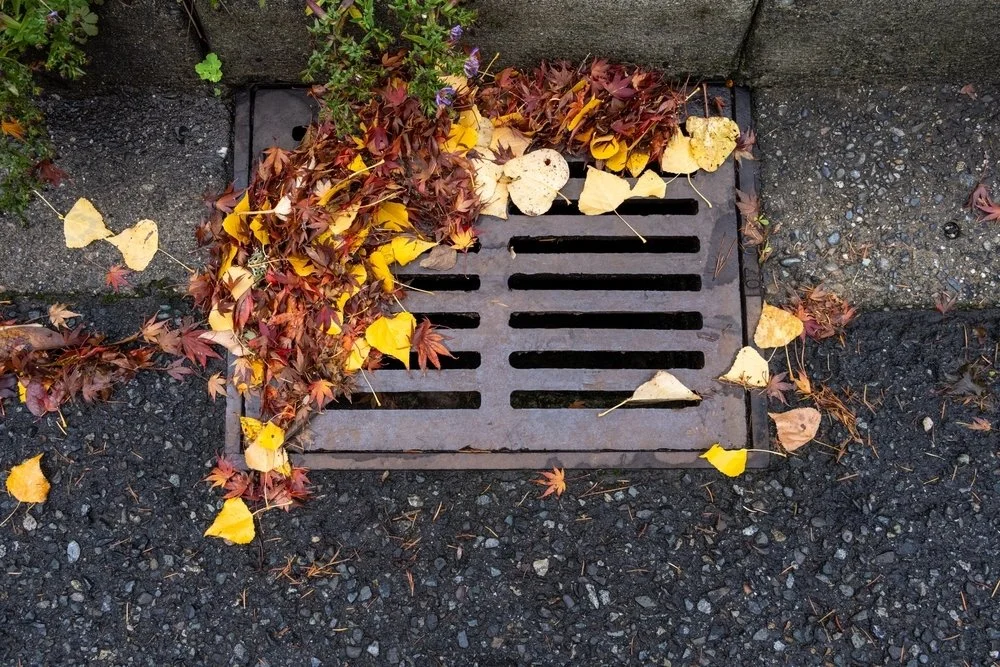
Keep Leaves Out of Streets, Gutters, and Storm Drains
Fall leaves are beautiful, but when they collect in streets and storm drains, they can cause problems for our neighborhoods and waterways. Leaves and other yard waste are a source of stormwater pollution that can affect the health of local creeks, streams, the Jordan River, and ultimately, the Great Salt Lake.
Never rake or blow fallen leaves into the street! Instead, mulch them into your lawn or garden to help enrich the soil, or rake them up and dispose of them in the trash or at an approved yard waste disposal facility.
How Fallen Leaves Cause Flooding

When leaves collect along curbs and gutters, rain and melting snow can carry them into storm drains. Wet leaves stick together, forming thick mats that block storm drain openings and prevent stormwater from flowing freely into the drainage system.
When storm drains become clogged, water can back up onto streets, sidewalks, and nearby properties, causing localized flooding. Keeping leaves out of gutters and storm drains helps protect neighborhoods and keeps stormwater flowing where it should.
How Leaves Pollute Our Waterways
Leaves are natural, but too many leaves entering our waterways can create water quality problems. As leaves decompose, they release nutrients, including phosphorus and nitrogen, into the water.
Excess nutrients can contribute to algae growth, which can reduce oxygen levels in the water as algae die and decompose. Low oxygen levels can harm fish and other aquatic life and disrupt the natural balance of our waterways.
Unlike wastewater from our homes, stormwater generally flows through storm drains directly into local waterways without being treated or filtered. That's why keeping leaves and other yard waste out of storm drains is so important.
Do a Little. Help a Lot!
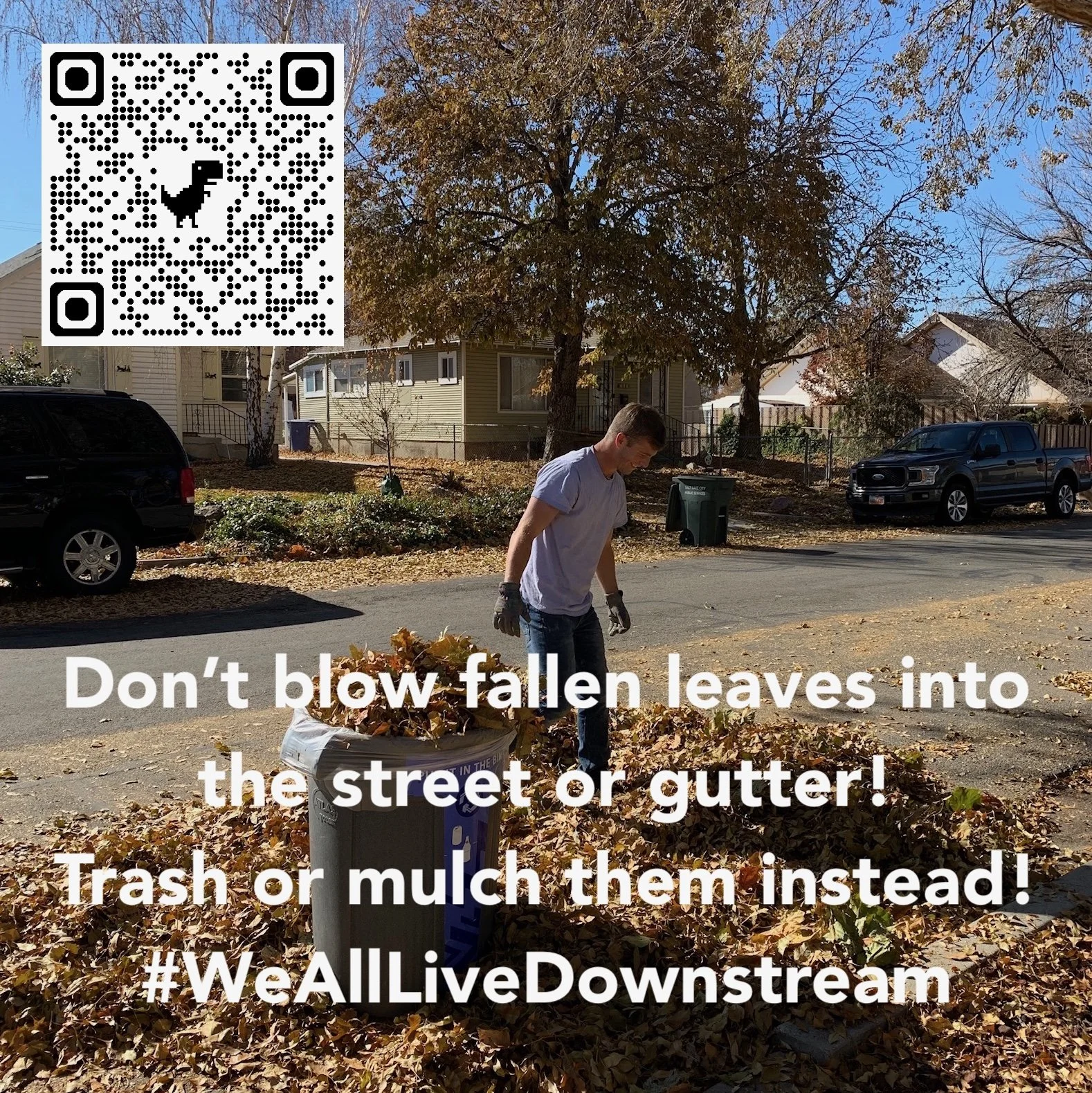
You can help prevent flooding and protect Salt Lake County's waterways with a few simple actions:
Mulch your leaves. Use a lawn mower to shred fallen leaves and leave a thin layer on your lawn or add them to garden beds. They'll break down naturally and return valuable nutrients to the soil.
Rake them up. Collect excess leaves and dispose of them in the trash or through an approved yard waste collection or disposal program.
Keep streets and gutters clear. Never rake or blow leaves, grass clippings, or other yard waste into the street.
Help keep storm drains clear. Remove leaves from nearby storm drain grates when it's safe to do so, without entering the roadway or lifting grates.
Remember: Only Rain Down the Drain!
Small actions at home make a big difference downstream. By keeping fallen leaves out of streets and storm drains, you're helping prevent neighborhood flooding and protecting the water quality of Salt Lake County's creeks, streams, and rivers.
We All Live Downstream.
Salt Lake County Stormwater Coalition
www.stormwatercoalition.org