Stormwater and Resident Engagement
Working Together to Protect Salt Lake County's Water

Healthy waterways begin with informed and engaged communities. Every resident, family, school, neighborhood, and business has an opportunity to improve water quality by preventing pollution before it reaches our storm drains. Because stormwater flows directly into local streams, canals, the Jordan River, wetlands, and ultimately the Great Salt Lake without treatment, everyday actions—such as picking up pet waste, reducing litter, maintaining vehicles, and using fertilizers responsibly—have a direct impact on the health of our watershed.
The Salt Lake County Stormwater Coalition believes that protecting water quality is most successful when education is paired with action. Community cleanups, school programs, volunteer projects, neighborhood partnerships, and family stewardship activities create lasting behavior change and build stronger, healthier communities. Municipalities, schools, nonprofits, businesses, and residents, can all help ensure cleaner water for recreation, wildlife, drinking water resources, and future generations.
Why Resident Engagement Matters
Resident engagement is a required component of every Municipal Separate Storm Sewer System (MS4) permit because informed residents are one of the most effective defenses against stormwater pollution. Public education alone increases awareness, but education combined with hands-on participation—such as volunteer cleanup events, restoration projects, and citizen science—creates long-term environmental stewardship and measurable improvements in water quality.
Benefits include:cleaner rivers, streams, canals, and wetlands; reduced trash, bacteria, and nutrient pollution; improved neighborhood pride; Increased volunteerism; greater understanding of local water resources; stronger partnerships between municipalities and residents; and compliance with federal and state stormwater permit requirements.
Community Engagement Success Stories
Salt Lake County Stormwater Coalition
The Salt Lake County Stormwater Coalition demonstrates how regional collaboration can expand education while reducing costs. Coalition members work together to develop educational materials, public awareness campaigns, teacher resources, annual reports, videos, social media content, surveys, and outreach events that help participating municipalities meet stormwater permit requirements through consistent countywide messaging.
Jordan River Commission
The Jordan River Commission promotes watershed stewardship through partnerships, restoration initiatives, educational outreach, trail programs, and best management practices that connect communities with the Jordan River corridor. Their collaborative approach demonstrates how multiple agencies and community organizations can work together to improve watershed health while expanding recreational opportunities.
EPA Public Participation Programs
Across the United States, EPA-supported watershed partnerships have demonstrated that volunteer stream cleanups, storm drain marking projects, neighborhood stewardship programs, and citizen science initiatives improve water quality while increasing public understanding of local environmental issues. These programs consistently show that communities become more invested in protecting waterways when residents have opportunities to participate directly in restoration activities.
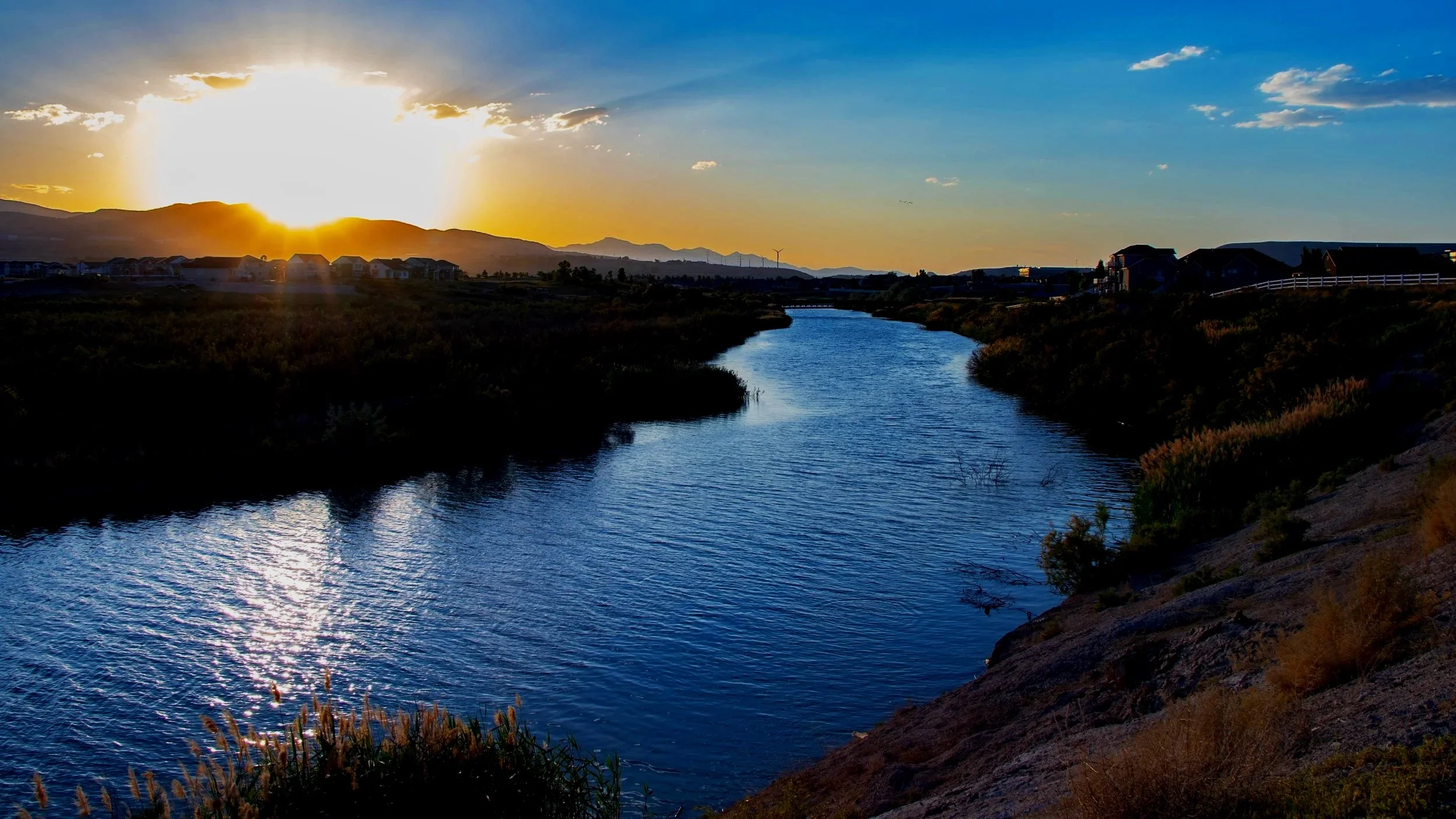
Restoring the Jordan River is one of Utah's most important urban waterways, providing recreation, wildlife habitat, flood management, and ecological connections throughout Salt Lake County. However, several sections of the watershed are impaired due to elevated concentrations of Escherichia coli (E. coli), a bacteria used as an indicator of fecal contamination. When E. coli concentrations exceed water quality standards, portions of the river may not fully support recreational uses, prompting the development of restoration plans under the federal Clean Water Act. The Utah Division of Water Quality has completed a watershed-wide Total Maximum Daily Load (TMDL) that identifies sources of bacteria and establishes reduction targets for 14 impaired assessment units in the Jordan River watershed.
Common Sources of E. coli include: Pet waste left on the ground; Large concentrations of ducks and geese; Illicit sanitary sewer connections; Aging sewer infrastructure; Wildlife; Livestock in some watershed areas; Urban stormwater runoff
What Municipalities Can Do: Expanding pet waste education campaigns; Installing pet waste bag stations in parks and along trails; Improving illicit discharge detection and elimination (IDDE) programs; Conducting dry-weather outfall inspections; Restoring streamside vegetation and riparian buffers; Increasing public outreach on bacteria pollution.; Supporting stream restoration and habitat improvement projects; Coordinating with wastewater utilities and watershed partners; Monitoring water quality and tracking progress toward TMDL goals.
Example Resident Engagement Initiatives Ideas and Resources
Adopt-a-Drain
Program website: Adopt-a-Drainprogram information: Adopt-a-Drain for MS4 Communities
Program developer: Hamline University Center for Global Environmental Education
Contact: Use the contact form available through the Adopt-a-Drain municipal website.
Adopt-a-Drain is a community-based stormwater stewardship initiative through which residents select a neighborhood storm drain, give it a name, and commit to periodically removing leaves, trash, sediment, and other debris from the surrounding area. Volunteers report their cleaning activities and the estimated amount of material removed through an online platform. This creates measurable environmental results while helping residents understand that neighborhood storm drains generally carry runoff—and anything in it—toward local waterways without treatment. The program has engaged more than 20,000 volunteers and is designed for implementation by cities, counties, watershed districts, and other public agencies.
The model is especially useful for municipal stormwater programs because it combines public education, pollution prevention, volunteer participation, geographic tracking, and data collection. Municipalities can promote seasonal drain cleaning before rainstorms, during autumn leaf fall, and when snow begins to melt. The platform can also support school service-learning, neighborhood competitions, volunteer recognition, and targeted outreach in drainage areas that discharge to impaired waterways. The program began in Saint Paul in 2014 through cooperation among the city, the Capitol Region Watershed District, and Hamline University and later expanded into a broader regional and national initiative.
Georgia Adopt-A-Stream
Community Water-Quality Monitoring and Stewardship Program
Program website: Georgia Adopt-A-Stream
Getting started: How to Get Started with Adopt-A-Stream
Training opportunities: Workshop Descriptions
Materials and resources: Adopt-A-Stream Materials and Resources
Contact page: Contact Georgia Adopt-A-Stream
Email: AAS@dnr.ga.gov
Mailing/office address: 2 Martin Luther King Jr. Drive SE, Suite 1452 East, Atlanta, GA 30334
Hours: Monday through Friday, 8:00 a.m.–5:00 p.m. Eastern Time
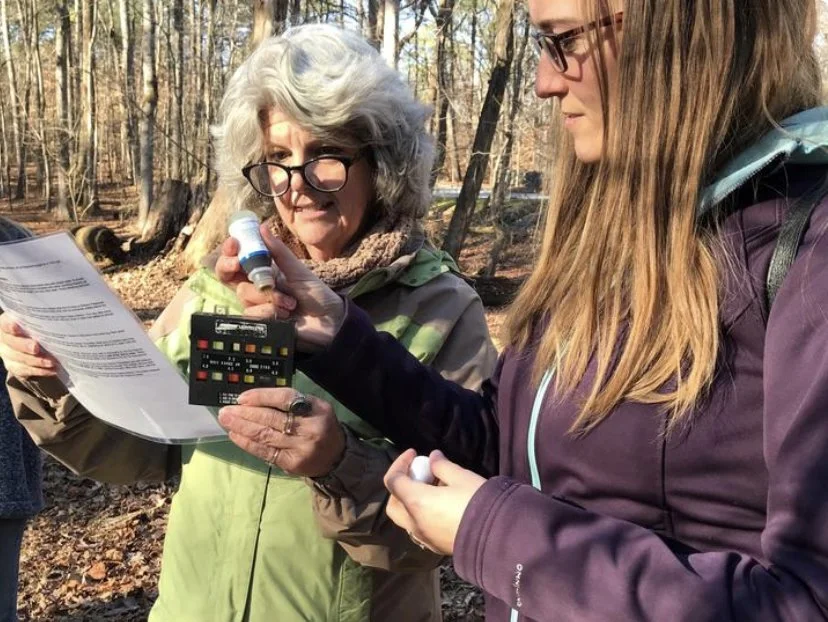
Georgia Adopt-A-Stream is Georgia’s statewide volunteer water-quality monitoring program. Established in 1993, it is operated as an education and outreach program of the Nonpoint Source Program within the Georgia Environmental Protection Division’s Watershed Protection Branch. The program trains residents, educators, students, civic groups, and local government partners to evaluate the physical, chemical, biological, and bacterial condition of streams, lakes, and wetlands. Its central goals are to increase awareness of nonpoint-source pollution, collect credible baseline data, document environmental observations, strengthen partnerships between residents and government, and provide communities with the training and tools needed to protect local waterways. The program is supported by state staff and a network of more than 70 local coordinators who provide training, technical assistance, equipment support, and connections to local projects.
Volunteers can participate at different levels according to their interests and available time. Activities include visual stream assessments, watershed evaluations, chemical monitoring, macroinvertebrate surveys, amphibian monitoring, wetland monitoring, and bacterial monitoring for E. coli. Trained volunteers register their monitoring locations and submit results to a centralized online database, allowing observations to be viewed over time and across geographic areas. The program also encourages volunteers to extend their work beyond data collection by conducting school demonstrations, organizing stream cleanups, developing rain gardens, and educating neighbors about pollution prevention. This combination of technical training, recurring participation, public education, and community action provides a strong model for municipalities seeking to move residents from basic awareness to long-term watershed stewardship.
Missouri Stream Team
Education, Stewardship, and Volunteer Monitoring Network
Program website: Missouri Stream Team
Program information: About Missouri Stream Team
Registration portal: Missouri Stream Team Portal
Email: streamteam@mdc.mo.gov
Phone: 1-800-781-1989
Mailing address: Missouri Stream Team, P.O. Box 180, Jefferson City, MO 65102-0180
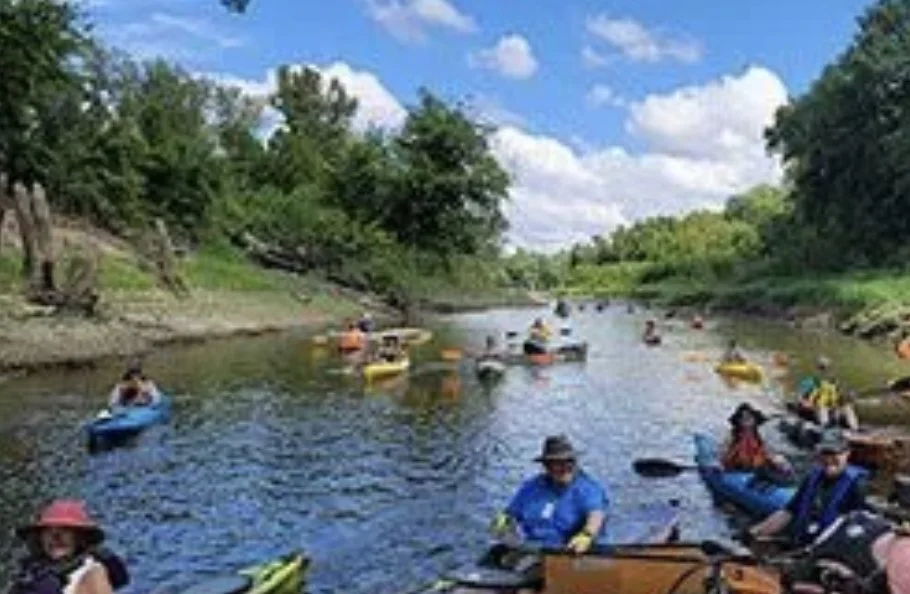
Missouri Stream Team is a statewide network that helps residents become actively involved in stream conservation through education, stewardship, and advocacy. The program grew out of Missouri’s first Rivers and Streams Conference in 1988 and operates through a partnership involving citizens and public agencies. Teams may include families, school groups, neighborhood organizations, fishing clubs, conservation groups, businesses, and individual volunteers. Rather than limiting participation to a single annual event, the model supports continuing relationships between volunteer teams and particular streams or watersheds.
Activities may include litter removal, storm-drain stenciling, streambank restoration, educational presentations, watershed inventories, public awareness projects, and volunteer water-quality monitoring. This makes the program a useful example for municipalities seeking to build a progressive engagement system: residents can begin with a cleanup or educational activity and later pursue training that allows them to collect credible environmental observations or monitoring data. The program also maintains centralized staff support, volunteer registration, activity reporting, training opportunities, and annual documentation of program accomplishments.
Clean the Bay Day
Chesapeake Bay Foundation and Local Government Partnerships
Program website: Clean the Bay Day
Locations and registration: Clean the Bay Day Locations
Email: ctbd@cbf.org
Phone: 757-644-4122
Chesapeake Bay Foundation general phone: 1-888-SAVEBAY or 1-888-728-3229
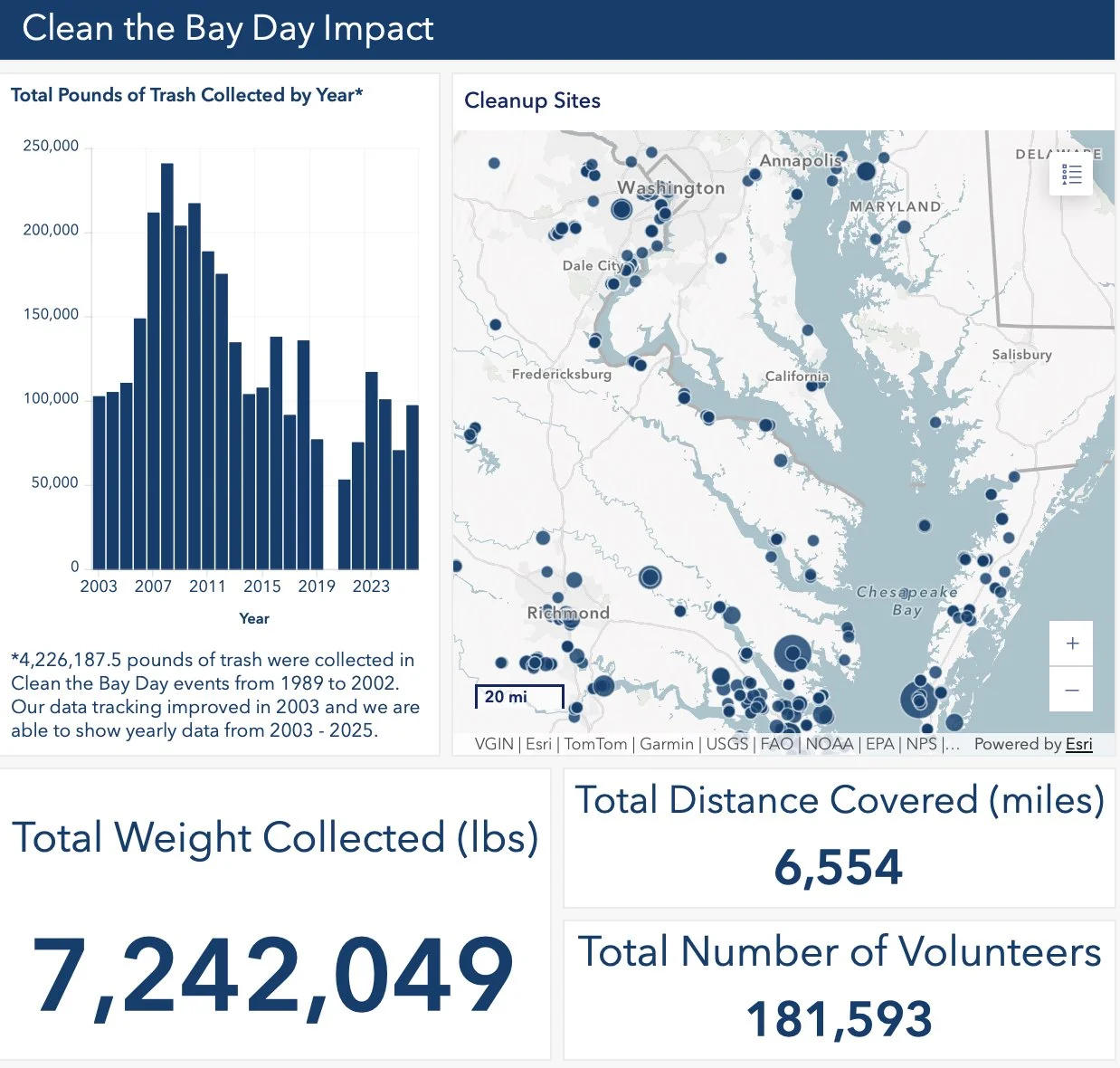
Clean the Bay Day is a coordinated, large-scale volunteer cleanup organized by the Chesapeake Bay Foundation in collaboration with local governments, nonprofits, military installations, businesses, community organizations, and sponsors. Rather than directing every participant to one location, organizers establish numerous hosted sites and allow volunteers to select opportunities suited to their location, interests, mobility, and level of experience. Projects can include shoreline cleanups, inland waterway cleanups, neighborhood litter collection, small-boat cleanups, and family-friendly projects.
The initiative demonstrates how a regional organization can establish consistent branding, registration, safety expectations, data collection, and publicity while local municipalities manage site-level implementation. In 2025, nearly 3,500 volunteers and more than 70 partner organizations worked at over 200 sites and removed more than 70,000 pounds of debris and litter. Its partnership structure is especially relevant to Salt Lake County because a countywide coalition could provide shared messaging and event coordination while each participating municipality selects cleanup areas, recruits local partners, supplies site leaders, and reports common performance measures.
Stormwater Education for Schools & Families
Children are among the most effective ambassadors for clean water. Students who learn about watersheds often share what they have learned with their families, creating lasting community-wide impacts. The Salt Lake County Stormwater Coalition offers curriculum, classroom activities, videos, and educational resources aligned with Utah science standards for educators, homeschool families, and youth organizations. See the SLCo Stormwater Coalition Educators Webpage or Stormwater Kids Webpage for more information.
Resources for Residents, Families & Educators
Salt Lake County Stormwater Coalition
Salt Lake County
Jordan River Commission
Additional Educational Resources
Project Suggestions and Examples of Best Practices for Resident Engagement
Effective community engagement in environmental water projects combines hands-on action, education, and shared local governance to build long-term sustainability. The bolded text below is linked to resources or examples for each of the applicable areas.
Participatory Science & Monitoring
Volunteer Water Sampling: Train residents to test local streams, lakes, or groundwater for basic health indicators, partnering with frameworks like the US EPA Participatory Science programs.
Pipe and Infrastructure Audits: Organize neighborhood initiatives like the EPA's Crowd the Tap to map and investigate local drinking water line materials.
Rain and Flood Tracking: Distribute low-cost rain gauges or set up community flood markers to track local precipitation patterns and runoff.
Conservation & Hands-On Action
Rain Barrel Workshops: Host build-and-take workshops where residents assemble rain barrels to harvest water for home gardens. Plain wood barrels are available at a reasonable price in South Salt Lake at the Northeast Barrel Company.
Rain Gardens & Native Planting: Engage community volunteers to install rain gardens that capture stormwater runoff naturally and filter pollutants before they reach local waterways.
Neighborhood Water Challenges: Run friendly reduction competitions between neighborhoods or schools, tracking savings online and celebrating top conservationists.
Education & Youth Engagement
Community Water Festivals, such as Jordan River Commission’s Get to The River hold interactive events featuring hands-on science demos, water cycle games, and conservation booths for families. Murray City’s River Festival activities are a great example!
School Water Quality Kits: Assemble, then artner with local classrooms to distribute youth water-testing kits, rain gauges, and native seed packets.
Youth Water Councils: Such as Mary’s River Watershed Council empower young leaders to design public awareness campaigns or lead local creek cleanups.
Core Best Practices for Success
Meet People Where They Are: Attend existing community gatherings, local association meetings, or faith-based events to listen to residents' primary water concerns before pitching new ideas.
Start with Small Victories: Focus initially on a highly visible, manageable win—such as removing trash from a local wetland or creek—to build immediate trust and enthusiasm.
Foster Shared Ownership: Involve local community members, technical experts, and municipal engineers early in the project design so the community views the final initiative as their own.
Salt Lake County Stormwater Specific Outreach Tools
Stormwater Outreach for MS4’s
The SLCo Stormwater Coalition hosts a robust resource for pre-written newsletter articles, photos, graphics, and additional water quality outreach. Stormwater Communications Webpage
High School Sports Fields Banners
Contact the school’s main office to request contact information for that specific school’s sports field banner program. Sometimes it’s the coaches and others it’s a staff member or PTA or other booster club volunteer. The price for the sports season (basketball—in the gym, football—on the field) varies greatly. The average cost is about $500. Most folks you speak with are used to these call referencing sponsorships, so they may say they’ll make a banner saying that the stormwater coalition or your city, etc. supports the basketball or football team. You’ll need to be explicit about wanting to provide the material for the banner, or offer to have a banner printed to drop off at the school. It takes a conversation to get to the fact that we are working to get the word out about the importance of clean stormwater and what people can do to help.
Salt Lake School District High Schools (select high schools from the pop up menu)
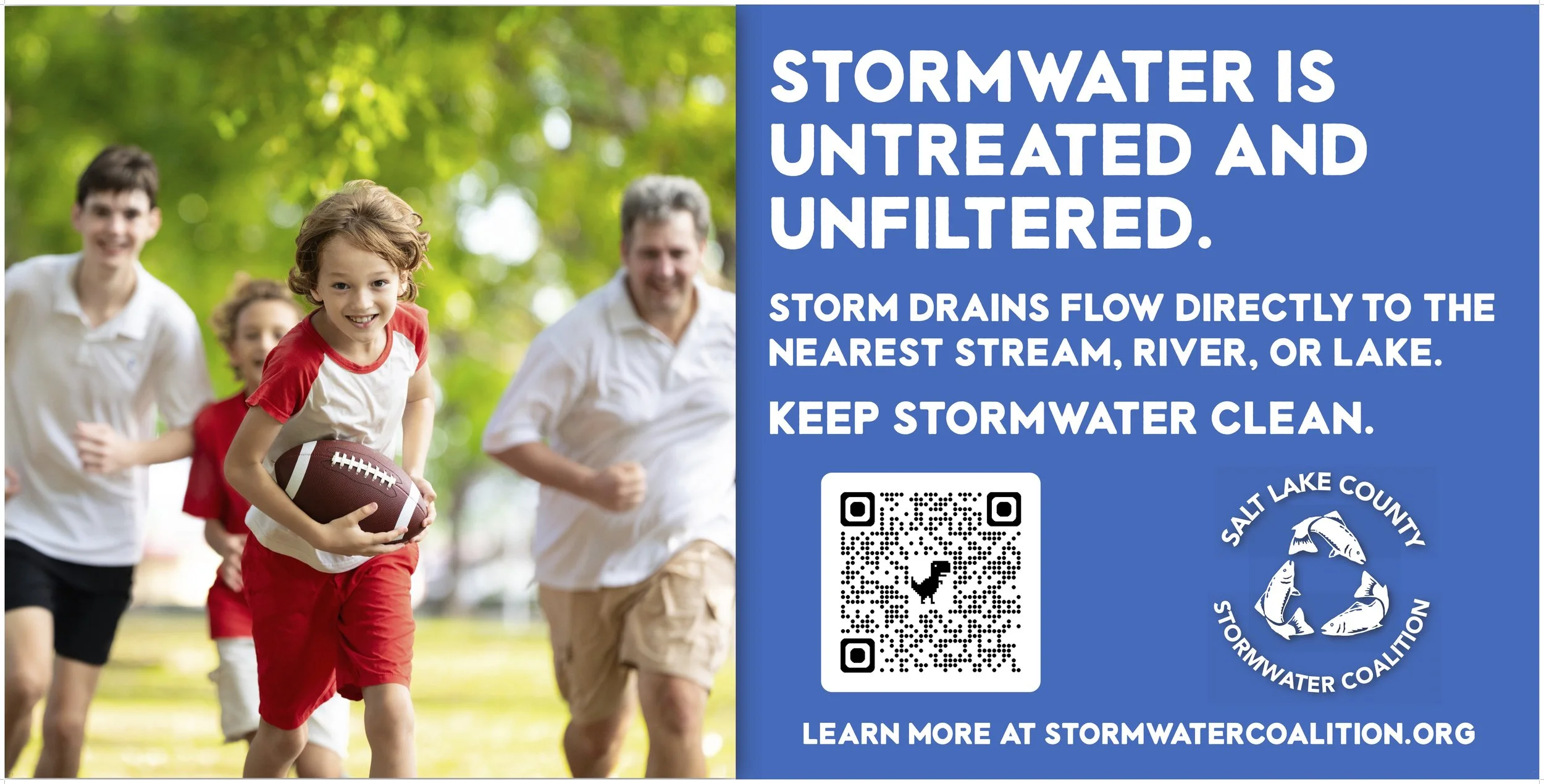
Click on the image to download a pdf version of this banner, suitable for printing at any banner or print shop.

Click on the image to download a pdf version of this banner, suitable for printing at any banner or print shop.

Click on the image to download a pdf version of this banner, suitable for printing at any banner or print shop.